Sunday, May 30, 2021

The Show Must Go On

PHOTO BY KCS

The curious effects of an astrological phenomenon did not deter the stellar performance of a group of girls on Saturday. 

They danced and tumbled and wowed their audience, despite a series of unexpected circumstances that delayed the show and had people wondering what the heck was going on.

The most obvious answer is a planetary illusion called Mercury in Retrograde.

From May 29 through June 22, the planet Mercury appears to be orbiting in reverse, according to the Old Farmers Almanac. "These periods are traditionally associated with confusion, delay and frustration. Think undelivered love letters, email blunders and frazzled travel plans."

These conditions were widely apparent yesterday -- the first day of retrograde -- on the north shore of Kauai.

Our day was planned around the dance performance, "I Believe" presented by the Kauai Creative Academy. Our granddaughter, Viva, 10, had worked and practiced diligently to be part of this show.

The road from Hanalei, which currently is only open for brief periods of the day, was closed for hours and into Saturday evening due to a motorcycle accident (?!).

Residents and visitors who found themselves in Hanalei or beyond were unable to move, the only means of travel southward being by boat or other water craft.

"We were lucky to find a ride in a canoe," said the mother of one of the show girls. They had to hike up the hill from the beach before they met their ride to Anahola where the show was scheduled.

Coco had spent part of the afternoon preparing a vegetarian dish for the post-show potluck reception. We were showered and dressed in our aloha finery. She had roses for Viva. We were ready to roll.

Viva on the silk  PHOTO: KCS

But I couldn't find the key to our rental car. I looked in all the usual places -- pants pockets, desk top, dish where key is supposed to be -- still no key. I couldn't have locked the key in the car, I told myself, not wanting to face that embarrassment.

I walked outside to check.

"The key is locked in the car," I reported back to my lovely and forgiving wife.

"How could you do that?"

"You know me. Sometimes I can do the impossible."

I did not like the expression on her face.

The warm tropical air began to get warmer. Time began moving faster. I did not realize that the planet Mercury had apparently begun to move in the opposite direction. I did not know that people were stranded in Hanalei. I did not know many things, including how to break into the rental vehicle without smashing the car window.

This was an emergency. We couldn't miss Viva's performance. Maybe we can borrow Rick and Marcie's car? We thought in unison. They are neighbors at Puamana.

"Sure," said Rick, as he tossed his keychain to me. "Have fun," said Marcie.

Good neighbors. Lots of aloha.

To our surprise, we were among the first to arrive at the school where a beautifully decorated pavilion awaited. Stories were circulating about the difficulties of many getting there.

"You're not the only ones," said our daughter, Isabel, Viva's mother, noting a strangeness in the air.

In due time (Hawaiian time runs a little late anyway) the show began. It was a wonderful performance combining music, dance and acrobatics. The choreography and presentation were impressive. The young performers had obviously put in a great deal of concentration and effort. Kudos to the creative director, Illima, who made it all possible.

The sky turned dark while we milled around following the show munching on delicious, lovingly prepared entrees, salads and sauces. The performers, to my amazement, were running around like chickens, showing no signs of fatigue or retrograde. 

Maybe it's only parents and grandparents who are affected.


Tuesday, May 25, 2021

About Nothing and Writing

Overlooking Kalihiwai Beach PHOTO BY COCO

A couple of weeks on the island and I am ready to stay here forever. What does one do on a small island in middle of the Pacific Ocean, the farthest archipelago from land on Earth? 

Nothing.

I've always been pretty good at doing nothing, which in reality is doing lots of things that are frowned upon in more conventional settings.

Regardless of where you go you remain leashed to the greater world and its vicissitudes by electronic media. But when you're surrounded by the largest ocean on the planet, your focus narrows. You smell the flowers, hear the birds sing, point your eyes at the turquoise-colored water or shift your view toward the remarkably verdant mountains that form a magical back-drop to daily living.

I know these simple things make many people nervous. I get it. We're programmed for accomplishment. 

During my first week on the island I swept the lanai several times, cleaned the barbecue grill, took out the trash, drove to the store, hiked to the beach, attended a going-away party, played ukulele and sang, joked around with the grandkids, discussed life with my daughter, watched Stephen Curry and the Warriors on TV, ate sushi, visited Hanalei, swam in the bay, surfed in the bay, attended a zoom meeting, partook in a yoga class and joined a Tai Chi group moving slowly and purposefully through space.

I become exhausted just thinking about all the nothings I've accomplished. In the end what do I have to show for it: nothing. But I've enjoyed every moment.

Today I paid some bills using my iPhone. I mean, is that anything to talk about? It's nothing.

PHOTO BY KCS

When I was in high school I returned to school following summer vacation and Coach Pete Lopez asked me, "Sam, what did you do during the summer?"

"Nothing," I told him, figuring he would get it.

"Nothing!" he exclaimed, practically biting off my head. "Don't tell me you did nothing!"

He was achievement-oriented. Despite that, he was one of the few coaches I got along with.

I guess I could have told him that I went swimming at my girlfriend's house. We made out. I rode my bike. I played a little baseball. And a little ping pong.

I can imagine his answer, "That's all!?"

It was the summer after my freshman year and the final summer of my life that I didn't work. That is, until I retired after more than 60 years of working. Since then I've done nothing.

I've traveled, visited friends, gone to museums, walked my dog, surfed and jotted down a a bunch of words, sketched a few things, drank coffee and beer. Enjoyed a martini on Friday evening, watched the sun set and the sun rise. Checked out the full moon. Looked up the definition of words I didn't know. Read a few good books.

I've heard from reliable sources that meditation is one of the best things you can do for you mental and physical health. It's supposed to be calming, enabling you to center yourself so that you can be in the present moment. 

Recently, while walking along amidst an extravaganza of island floral delights with nothing more to think about than placing one foot in front of the other, suddenly, I encountered a moment when everything became clear to me. I was able to solve a problem that had been bugging me for weeks.

It was a writing problem. I had been working on a chapter of my life and a particular circumstance arose that I wanted to avoid writing about.  As a memoirist, the writer chooses what to tell about their life. Do you tell the embarrassing stuff? The things you're not so proud of? Do you only write about your accomplishments?

It became clear to me that I must write about this incident I was avoiding, if only to discover why.

It's about a trip to Hawaii during which I never touched the ocean or beach, didn't ride a single wave. I was so focussed on my future I could have been anywhere. Still, I must have learned something. What happened? What did I see? What did I hear? Who did I talk to? Who talked to me?

I can put these elements into words and create something that I didn’t know existed. Through writing I can solve a mystery out of nothing.


Friday, May 21, 2021

Renaissance Man of Kauai

Donn "Curly" Carswell.    PHOTO:HONOLULU ADVERTISER

In less than a week of our arrival on Kauai, we learned that Donn "Curly" Carswell had died. Curly was more than a well-known and respected character on the island, he personified Kauai. The loss of this pioneer figure is tantamount to losing a part of the island itself, as if one of the waterfalls has gone dry.

Curly, who died on his 85th birthday, February 4, 2021, was a walking encyclopedia of information about any subject, especially the island's flora, fauna and history. He knew the name of every mountain, tree and flower. He spent most of his life on Kauai, leaving his indelible mark in many places including his beloved Princeville Ranch.

He was a no-nonsense bear of a man, tough and ornery, sweet and sensitive. I only knew him briefly, since 2017 when I met him at the Princeville Community Center in a yoga class. Curly and I were the only men in a room of about 25 women.

At some 300lbs, his once athletic body had filled out and it was obvious that his health was in precarious condition, although I never knew exactly what his issues were. He didn't talk about it. His wife, Gale, assisted him in laying out his yoga mat and props. She appeared in fine health. They worked together as good respectful partners do. Curly's presence in the room was palpable.

When he learned that I was from Santa Cruz, he told me that while he attended Stanford University in the 1950s he would go to Santa Cruz to surf Steamer Lane. This was before wetsuits and leashes and that other "baby" stuff.

"Did you know Chubby Hernandez?" he asked me.

I told him that was before my time in Santa Cruz.

"He was a beautiful athlete," said Curly in his gravelly voice.

He didn't mention that he, Curly, was an All-America guard on the Stanford football team. He graduated from Stanford with a major in civil engineering and minor in geology.

Before his college years in California, he attended Punahou High School on Oahu. After college he served in the U.S. Marines Corps. He started the first fitness gym on Kauai which he operated for 30 years. He also worked for the Grove Farm and Princeville corporations.

During one of our regular visits to Kauai I learned about a Tai Chi class at the community center. When I showed up for my first effort at Tai Chi, Curly was there.

Tai Chi master Skip Rush, another well-known island figure, referred to Curly as a Tai Chi grand master. Skip would sometimes ask Curly for clarification of some aspect of the ancient martial art.

I asked Curly where he learned Tai Chi.

"On the Yangtze River in China," he said.

I was not surprised. He was a Black Belt Judo master, too.

Curly never missed a Tai Chi class. On Saturdays Skip held the class on the shore of spectacular Hanalei Bay. I knew Curly had arrived when I heard classical music coming from his pick-up truck. He needed minor assistance from his daughter to get across the lawn, moving several yards at a time with his walker, interspersed with short seated rests. He was resolute and focussed.

Curly missed his first yoga class when his wife Gale suffered a stroke, after which she suddenly and unexpectedly died. Curly was devastated. He didn't show up for Tai Chi. "He's suffering from a broken heart," said Skip. Curly and Gale had been married 55 years.

Gale was a descendant of the Wilcox family of first haole settlers in Hawaii. She had been a picture of health and fitness compared to Curly.

In 1978 Curly and Gale started Po'oku Stables at Princeville Ranch, as well as the famous Hanalei Stampede Rodeo. He was an ace calf-roper. In the early 2000s, he served as president of the Hawaii Cattleman's Cooperative.

His obituary in the local newspaper identified him as "a leader in the community. He was an entrepreneur, a Marine, an engineer, an avid handball player and a rancher. He was an adventurer and always met life head-on with passion, curiosity and enjoyment. He faced the circumstances of life without apology or complaint, and lived such a full life that he is often described as having lived "nine lives."

Curly knew that I had worked in the marketing department at the Santa Cruz Beach Boardwalk, a world-famous seaside amusement park. When a newcomer would join our yoga or Tai Chi group, he enjoyed introducing me as a former "clown" from Santa Cruz.

The island isn't the same without him. When Curly passed, we lost a treasure, yet you can hear his indomitable spirit whistling when the trade winds blow.

Aloha, my friend.


Thursday, May 13, 2021

Flight of the Grandparents

Coco, Viva and Mystiko. PHOTO: KCS

Remember when a trip from California to Hawaii was a five-hour plane flight? Coupled with a Mai Tai or two? You were greeted at the Honolulu airport by a lovely wahine who placed a lei around your neck? You were overwhelmed by warm, tropical fragrances?

Not today. Or more precisely, last Monday. Not with a recent rise in COVID cases in the islands.

Of course I date myself when I describe the way it used to be. Today we can travel practically anywhere in the world with an electronic screen and a keystroke.

That very modernism was the difficulty for us -- grandma and grandpa -- as we fumbled and grumbled through the airports on our way to Kauai to see our daughter and two grandchildren. Most airplane travelers to the islands are the younger tech-savvy types who are not fearful of downloads, screenshots and Qr codes.

"Do you need some help?" said a young couple behind us as we tried to locate our Qr codes. We were obviously strangers in a strange, electronic land.

The state of Hawaii requires proof of a negative COVID test within 72 hours of your flight, downloaded or printed. A Qr code (the little square with squiggly lines)  is necessary for each leg of your flight. It reveals everything about you including the name of your first pet. All incoming flights go through Honolulu.

Our traveling time was 13-hours, which included a three-hour layover at the Honolulu airport. That is, from airport shuttle to arrival at our daughter's home on Kauai. Lucky for me, I cannot stay awake that long. Regenerative naps have become de rigueur.

All seats were occupied during both legs of our trip, like eggs in a carton. Masks were required.

"I wish that guy would cover his nose," said my partner known to her grandchildren as Coco.

Her point was emphasized by occasional sneezing by fellow passengers, the most efficient method for spreading the virus.

Note to self: stay covered but don't try to feed yourself with mask on.

At the Kauai airport in Lihue we were waylaid by the National Guard, while younger travelers sped through check-points like Indy-500 racers. We were horse-and-buggy travelers.

"We need to see your test results," said the guy in camouflage.

I proudly pulled up a screenshot of my negative results.

"I cannot see the date of this test," he said.

He was correct. It was cut off at the bottom. I'm still learning how to type with my thumbs.

Fortunately we had printed copies of our test results on paper -- remember paper? This was a stroke of pure, neurotic luck. More fumbling to find said papers.

Finally free on the island, all we had to do was call a taxi for a short jaunt to our car rental agency, Island Cars, where cheapskates like us can rent a used car that has been broken-in (not into).

Rental cars are going for as much as $500 per day in the islands. Our rate was much better but still more than what we paid a year ago.

"You got a great rate!" said the woman at the agency. "It's a good thing you reserved early. Rates are much higher today."

"Great!" I said, feeling like I was losing money to save money.

The agency had sold most of its fleet during the COVID lockdown. As the islands have opened up, demand has increased while supply is severely limited.

"We have this Chevy Sonic ready for you," she said. 

Sonic? Don't ask. We could wait an hour or so for that Nissan Versa which needed cleaning.

"We'll take the super Sonic." 

Both compact vehicles require youthful agility to be seated. I complimented myself for maintaining regular yoga practice. Those downward dogs can pay off.

And it's all worth it.

When we met our beautiful daughter and two grandchildren with hugs for the first time in more than a year, the great value of our journey was confirmed.

A hug in this case was better than a lei.


Friday, April 9, 2021

The New Religion


Is surfing the new motorcycle, 2021's remedy for midlife crisis?

Or is it simply a global religion whose converts are being sent to Santa Cruz to plumb the debt of their weary souls? It's got to be the water, the holy fluid that absolves sin, invigorates the spirit and requires a wetsuit for baptism.

COVID has certainly sent many a seeker -- young, old and in-between -- to immerse themselves into the sacred, icy waters of Monterey Bay. Surely it's the plethora of good surf breaks that brings them, but one must give a nod to the bay's designation as a National Marine Sanctuary.

There are no oil rigs or five-star resorts.

"I want to learn to surf," says Joseph, a septuagenarian and recent arrival to Surf City. He's a big man with white hair whose speech is salted with an accent that could be middle eastern. He's retired and came to town to be near his adult children who have settled here.

You can picture Joseph lying on his belly on a 12-foot surf board.

Marcel, a younger man, sits on his board in the lineup at Cowell's, a premier bunny-slope break and once a neighborhood hangout for local families. 

"I am from Marseille," says Marcel with a clever grin and French accent. "I come to Santa Cruz to surf: it's Mecca. I had to make the pilgrimage."

He is surrounded by surf-school groups, many who are 8-12 years old and come from the greater San Francisco Bay Area. Their parents watch from the shore, thrilled that their children are experiencing this uber popular California pastime.

In his 2010 book, Kook, adventure writer Peter Heller tells his own story of taking up the challenge of surfing at age 48 with the intension of going from kook to shredder in a single year.

Heller defines kook: Although it means "beginner surfer," he says, "it's not a neutral term; it carries a slug of derision, a brand for the clueless, for those without hope, without grace, without rhythm. To be a kook," he says, "is to be consigned to a kind of beginner's hell."

He yells when he catches his first waves, the call of the kook.

Soon, as is the case with most wannabe and practiced surfers, he becomes obsessed. There is an undeniable allure to being one with the natural liquid environment of the ocean, its beat and pulse, ebb and flow, and with the ultimately grand sensation of riding a wave, the peeling rush and exquisite silence.

But that does not come without some hard knocks including being yelled at and trying to figure out the fineries of a variety of surf breaks and the formula for going from his stomach to his feet on a sliding wave. 

Early on, he assumes the self-mocking stereotype, outfitting a VW bus with a quiver of boards, his girlfriend and a map of Baja, California.

He breaks down common myths about surfing and he introduces the reader to a few unique characters whose old-school savvy and eccentricity will soon be the stuff of legend as they fade into the sunset. You will not find these dudes in most lineups today. 

As an accomplished outdoorsman and environmentalist, Heller approaches surfing with the unique and mostly overlooked perspective that "the ocean is dying." He laments the many resorts that have spoiled way too many natural coastlines and reefs. He notes the diminishing sea life, particularly the whales and dolphins whose sophisticated intelligence has been exploited.

The book is about more than simply surfing yet the subtitle -- "What surfing taught me about love, life, and catching the perfect wave" -- seems forced, cliche, and does not do the book justice. But who would purchase a book about surfing with the title: The Ocean is Dying. Surf now while you can?

From a total kook flailing in the soup at Huntington Beach to paddling out on an overhead day at Puerto Escondido -- the Mexican Pipeline -- is an impressive one-year journey. He does marry his girlfriend along the way with a new realization of the meaning of love.

Heller proves it's okay to be a kook.


Tuesday, March 30, 2021

When to Cancel Culture, and How Much?

PHOTO:LA TIMES


If, a century ago, your great-great-grandparents lost their home and business due to an eminent domain decision based on racial prejudice, should you be entitled to reparations today? And how much should that restitution be?

That is the crux of a controversy that is currently happening in the upscale beach town of Manhattan Beach, Calif., where, until recently, controversies centered around limits to the size of your McMansion.

The death of George Floyd last year brought the issue into the spotlight as the Black Lives Matter movement took center stage across the U.S. Old memories and festering hard feelings were resurrected. 

One hundred years ago Manhattan Beach was a no-man's land of wind-blown sand dunes on the shores of Los Angeles County's South Bay.

Spurred by the American entrepreneurial spirit, Charles and Willa Bruce purchased land next to the beach and developed a beach-gear rental business and eatery. Their success prompted several other African-American families to settle there.

In 1924, the city of Manhattan Beach condemned the entire property, ostensibly, to develop a public park. The Bruce's were paid $14,500, considered fair market value at the time, and their land was taken through eminent domain. Other property owners, Black and white, were paid $1,200 -- $4,200 per lot.

A city task force researched the history of Bruce's Beach and the city published highlights on its Website. These include mention, in the 1920s, of Ku Klux Klan activity in the area. And there is no question that racial prejudice influenced the city's decision to acquire the land.

"We cannot be responsible for something that happened 100 years ago," says Suzanne Hadley, mayor of Manhattan Beach, acknowledging the unfairness of what happened then. 

She says the community is not racist today. "I would not live in a racist town." 

Residents of Manhattan Beach are predominately white, with fewer than 1-percent Blacks, according to the L.A. Times.

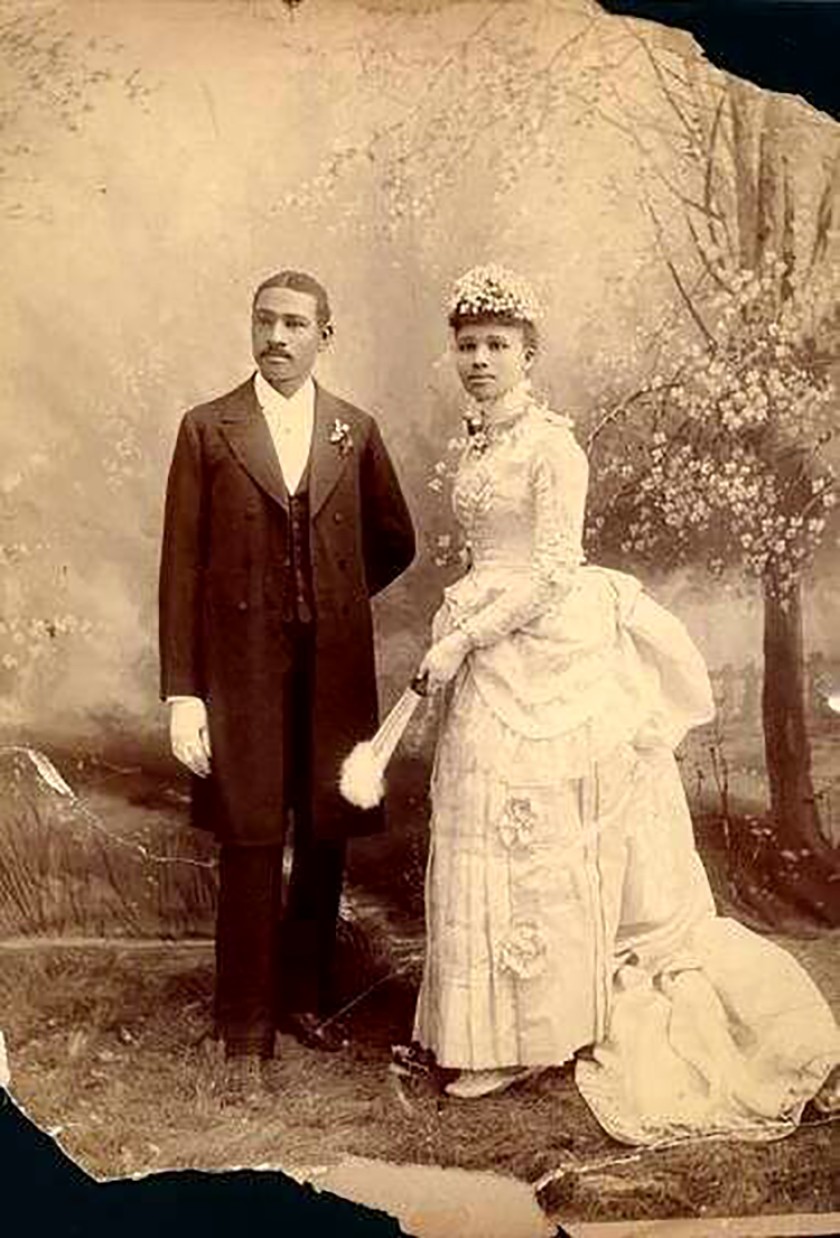
Charles and Willa Bruce PHOTO:AMTHONY BRUCE

Today, that property, named Bruce's Beach, is the only park in town near the beach, a lovely terraced greensward that includes a couple of basketball hoops, park benches, a few trees and shrubs. A Los Angeles County Lifeguard station is located adjacent to the beach, on the same site where the Bruce's business had been.

Descendants of the Bruce family and activists are asking for reparations, ranging from return of the property to the family to various monetary remunerations. Land value is estimated at $70 million.

Hearing the clarion cry of injustice, Los Angeles County Supervisor Janice Hahn has taken up the issue, specifically involving the property occupied by the County Lifeguard station. In 1995 that land was deeded to the county.

Hahn has suggested transferring the property to Bruce descendants with a lease-back arrangement to the county. Other more "creative" suggestions, from a state reparations agency, include providing family descendants with free tuition to the University of California, or no-down payment for first-time (family descendant) home buyers within the state.

The Los Angeles Times recently featured a detailed story about Bruces's Beach, including a related story about claims of racial prejudice in the local surf lineup. The "n-word" was mentioned. 

A city task force on the subject reportedly dissolved into disagreement and disarray. The city refuses to apologize for the original injustice. "We don't want to wear a scarlet 'R' on our chest," says Hadley.

Others disagree with Hadley, believing that making an apology is extending long-due respect to those whose home and livelihood were taken away because of the color of their skin. It is the opposite of racism. 

Visitors to the park today include people of all ages and colors. The publicity has increased park activity without causing notable problems. One newcomer is a food truck called Black Flour, a not-so-subtle pun. The truck features a variety of crepes made from black buckwheat.

If the word "buckwheat" brings up memories of racial stereotyping in your mind, rest assured that it is only coincidence. The Black Flour food truck is owned by a couple from France who claim they are honoring a traditional specialty from Brittany on the French coast.

According to the Times story, "The world is watching" Manhattan Beach.

I spent five days last week mostly near Bruce's Beach park, including one day when Mayor Hadley was being interviewed there. My 96-year-old mother-in-law is a park neighbor. She worries about losing the park that she has enjoyed for more than 60 years. I feel confident that a solution that respects all sides can be found. It will be found somewhere in the middle, with each side giving up something.

As a starting point, how about an apology.


Wednesday, March 24, 2021

A Dangling Meditation

The thirties were a time when people had very little and there was nothing to hide behind, and that Bull Durham tag dangling from the string coming out of your pocket -- that showed you had it, you could roll with one hand. -- Charles Bukowski, Dangling in the Tournafortia

PHOTO:KCS

Dangling. There is something sexy about that word. When something dangles, you want to touch it softly with your fingers, or study it carefully with your eyes while it changes color and reflects light from various angles. Or perhaps observe it in anticipation of the dangling object falling, losing its precarious grip. Yet it doesn't. It simply, dangles.

I think of a woman's dangling earrings and how they sway or turn with the tilting of her head, ideally when she smiles or laughs. The way dangling metal or feather brushes her skin as though it's whispering a secret, tender and personal. 

In 1966, when Simon & Garfunkel's song, The Dangling Conversation, hit the radio airwaves, I thought it was cool. I envisioned hanging out with my intellectual friends engaged in deep discussion about philosophy, art and literature: Descartes, Klimt and Dostoevsky. 

Even though I didn't know much about those things, I pictured drinking coffee and smoking cigarettes and being engaged in a higher form of discussion than the usual chatter of who's having a party and when and what we might wear. Or what happened after the football game on Friday night.

This dangling curiosity sounded like it could just go on forever in a cloud of comfort and bliss and elevation of the spirit and intellect.

I'm dangling, here. Can't you see. I'm dangling. 

So, the other day, I am walking my loyal dog Frida under a firmament of heavenly clouds scudding like runaway roosters across the sky. One minute the white cumulus are pushed away by dark gray thunder heads and the air temperature goes from warm to freezing. Then the reverse happens.

Sun. Rain. Sun. Rain. Sun...

The wet trail emits an earthly scent that makes me want to praise the ground beneath my feet.

I am layered with three shirts, bucket hat atop my head and my COVID mask dangling, yes dangling, from a lanyard around my neck. I am feeling sexy as hell. That's because of my long healthy strides reminiscent, I tell myself, of when I once ran the 880, a two-lap race around the track.

The endorphins have kicked in. I break a sweat as I power up the dirt trail, Frida in my wake. When I approach other walkers wearing their masks, I pull mine over my face. I've had my two vaccinations yet continue to follow healthy standards. It's courtesy. 

My sunglasses fog up when I cover my face with the mask. As my body heats up, swelling with warmth, I pause at a bench to dab my runny nose, remove my top shirt and my sunglasses. I fumble with my mask, my shirt, Frida's leash as if we are taking a break from running the Iditarod through the Alaskan Yukon. We fall behind if I dawdle. Gotta go. Mush, Frida!

We reach the end of the trail before I realize that I have lost my sunglasses. They're not in my pockets or covering my eyes. How many times have I lost glasses only to realize I am wearing them. Not this time.

I must have left them on the park bench when I removed my shirt. Come on, Frida, we're going back. Got to retrace our steps. I'm carrying Frida's leash and my top shirt in one hand. She never leaves my side.

We arrive at the bench and my glasses are not there. I search around. Maybe they fell into the tall wet grass. No dice.

We continue down the trail and meet a woman going in the opposite direction. She's not wearing a mask. She's been jogging. A baseball cap rests on her head with short red curls dangling on the sides. She says she saw us on the road earlier and watched us turn up this dirt trail, asks where does it go?

I tell her and mention that I'm retracing my steps looking for my sunglasses. She thanks me for the trail info and, understanding that I will be heading back her way, says if she finds my glasses she will place them on a rock or bench. Look for them, she says, and continues onward while I muster all the way to where the trail starts, but find no glasses.

I raise my arm that is holding Frida's leash and my shirt, gaze down and there, dangling, like a monkey with one arm hanging onto the branch of a tree, I see my sunglasses. How did they not fall to the ground? Were they dangling from my shirt this whole time?

I am amused and relieved. I carefully adjust the sunglasses as I place them on the bridge of my nose with their temples resting above my ears.

Shortly before I reach home, I hear a voice: "Hey!" I spot a face framed in red curls in the distance peering out of the window of a blue van heading north.

I see you found them, she yells.

I think, what are the chances that I cross paths with her again: she in her van on a main road, me walking on a side street? We must be dangling on the same thread.

Like a poem poorly written / We are verses out of rhythm / Couplets out of rhyme / In syncopated time (in syncopated time). -- Paul Simon